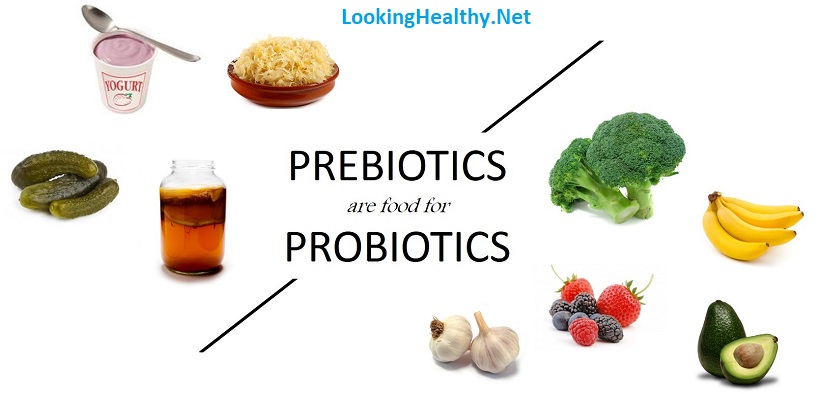
Many nutritional experts will say that you are what you eat. To be more accurate, you are what you feed the trillions of microorganisms that live in your gut. Just like the surface of your body, the lining of your gut has trillions of microscopic creatures (bacteria).
These creatures form a micro-ecosystem known as a microbiome. What you feed your microbiome has an impact on your health. The healthier your microbiome is, the healthier you are.
A microbiome has nearly 1000 different species of bacteria. The key to having a healthy microbiome is maintaining a balance of these bacteria in your gut.
There are only two ways of maintaining this balance – nourishing the bacteria that are already in your gut by giving them prebiotics (foods they like) and adding new microbes directly to your microbiome (probiotics).
Probiotics:

Probiotics are the good bacteria living in your gut. In your microbiome, there are good and bad bacteria. A balance between them is necessary for a healthy gut. Here are some of the ways probiotics (good bacteria) help you:
- They break down food
- They ensure that your immune system is working well
- They support your overall gut health
- They affect how you think and how you feel: The good bacteria in your gut improve and regulate the production of hormones such as leptin and insulin. These bacterias also produce neurotransmitters such as GABA, dopamine, and serotonin that plays a role in your mood.
Prebiotics:

Prebiotics are the food for the good bacteria in your microbiome. They are the non-digestible fiber in certain foods. Prebiotics stimulates the growth and activity of the good bacteria (probiotics). All prebiotics are fiber, but all fibers are not prebiotics.
You need pre and probiotic foods as they all work together to support your microbiome. Without prebiotics, probiotics in your gut will starve. Lack of both pre and probiotic foods leaves you with a host of problems including:
- constipation
- leaky gut
- weak immune system
Health benefits of a probiotic diet
Some of the health benefits of adding probiotic foods in your diet include:
1. Improving gut health.

The good bacteria in your gut help in the digestion of food. If your digestive system is working well, you are less likely to have bloating, gas, and other indigestion symptoms. Probiotics will help improve your condition if you’re struggling with irritable bowel syndrome (IBS), inflammatory bowel disease (IBD), urinary tract infections, Crohn’s disease, and other health conditions.
2. Boosting mental health.

Learn More..
 Looking Healthy